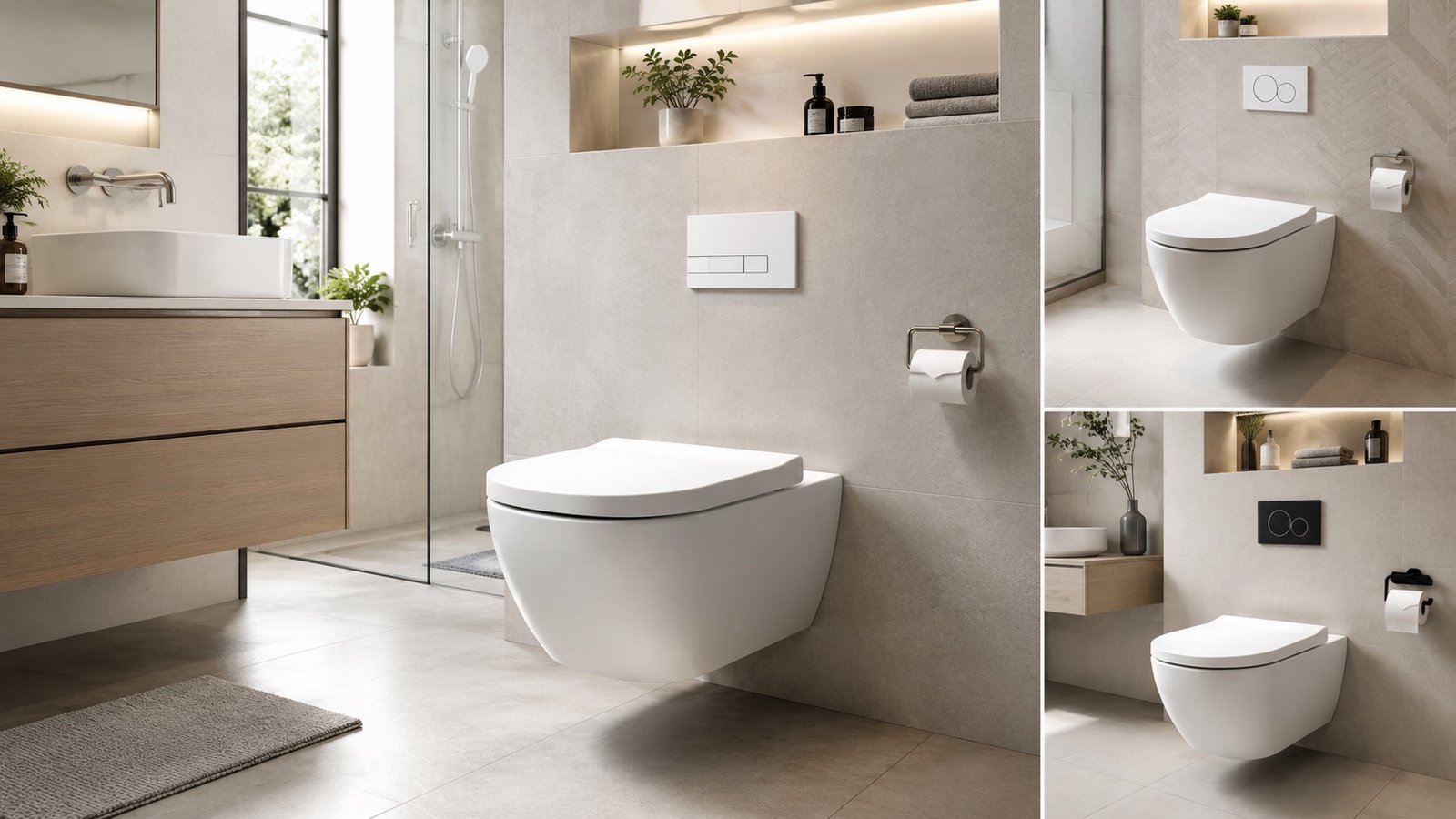
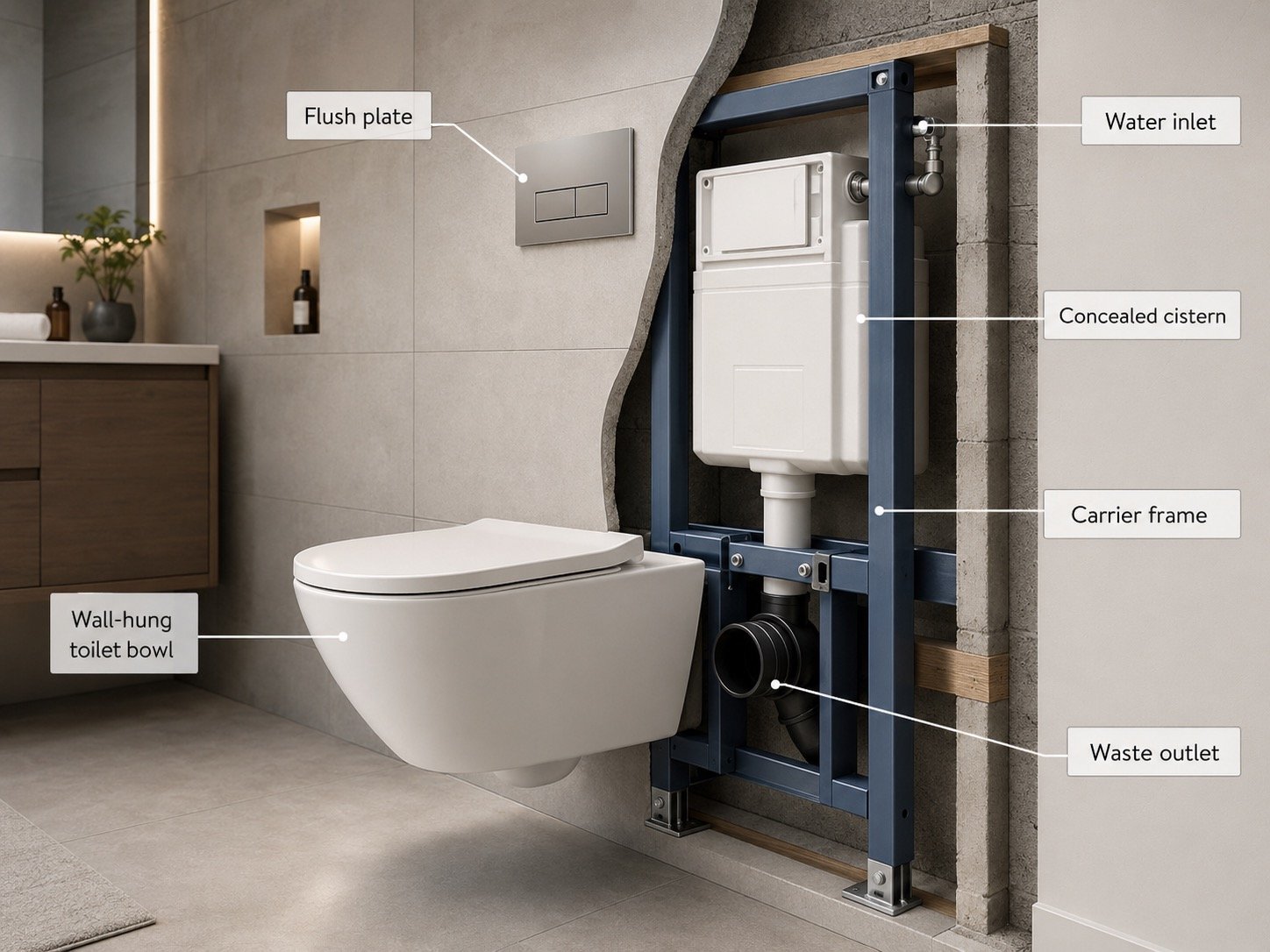
A wall hung toilet is mounted above the bathroom floor while its water tank, support frame, and much of the plumbing are concealed inside the wall.
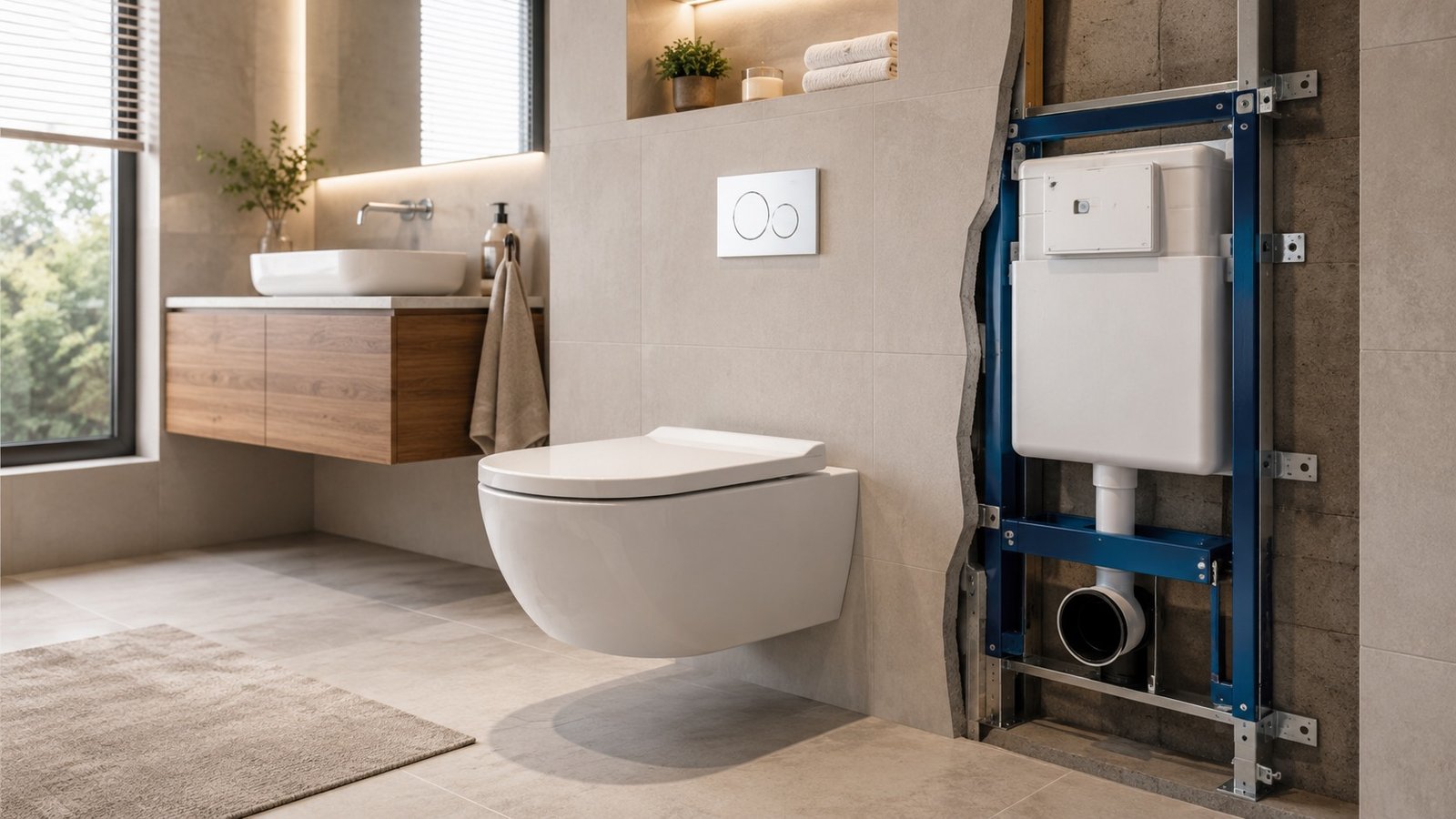
This creates the clean, floating appearance commonly seen in modern bathrooms. But behind the finished wall is a carefully engineered support and flushing system that carries the toilet’s weight, stores flushing water, and connects the bowl to the drainage system.
Quick Definition
A wall hung toilet uses an in-wall carrier frame to support the toilet bowl. The concealed cistern, water connections, and waste outlet are installed behind the finished wall, leaving mainly the bowl and flush plate visible.
How Does a Wall Hung Toilet Work?
Although the toilet appears to hang directly from the wall, the wall surface itself is not normally carrying the load.
Behind the wall is a strong carrier system fixed to the building structure. The ceramic bowl is attached to mounting studs on this carrier, while the concealed cistern stores water for flushing.
| Stage | What Happens |
|---|---|
| 1. Flush Activated | The user presses the wall-mounted flush plate. |
| 2. Water Released | Water flows from the concealed cistern into the bowl. |
| 3. Waste Removed | The flushing system carries waste toward the outlet. |
| 4. Drainage | Waste passes through the rear outlet into the building drain. |
| 5. Cistern Refills | The hidden tank refills automatically for the next flush. |
Main Parts of a Wall Hung Toilet System
A wall hung toilet is more than just the visible ceramic bowl. Most installations use several components working together behind and in front of the wall.
| Component | Function |
|---|---|
| Carrier Frame | Supports the toilet and transfers the load to the building structure. |
| Concealed Cistern | Stores the water used for flushing. |
| Flush Plate | Activates the flushing mechanism. |
| Mounting Studs | Secure the ceramic bowl to the carrier. |
| Waste Outlet | Connects the bowl to the drainage system. |
| Water Connection | Supplies fresh water to the concealed cistern. |
Important: The ceramic toilet is not simply attached to ordinary wallboard. The concealed carrier and surrounding structure must be installed according to the carrier manufacturer’s requirements.
How Is a Wall Hung Toilet Installed?
Installation is normally completed in two stages: the concealed system is installed before the wall is finished, and the ceramic toilet is mounted afterward.
| Step | Installation Process |
|---|---|
| 01 | Prepare the Wall Confirm framing, plumbing position, drainage, and available installation space. |
| 02 | Install the Carrier The carrier frame is positioned, leveled, adjusted, and securely fixed to the structure. |
| 03 | Connect Water and Drainage The cistern is connected to the water supply and the waste elbow to the drainage system. |
| 04 | Test the System Connections should be checked before the wall is permanently closed. |
| 05 | Finish the Wall Wallboard, waterproofing, tile, or other bathroom finishes are installed around the system. |
| 06 | Mount the Toilet Bowl The bowl is connected to the flush and waste pipes and secured to the carrier studs. |
| 07 | Install the Flush Plate The actuator plate is fitted and the complete system is tested again. |
Why Are Wall Hung Toilets Popular?
More Open Floor Space
Because the bowl is raised above the floor and the tank is hidden inside the wall, the bathroom can appear more open and less cluttered.
Easier Floor Cleaning
The exposed floor underneath the toilet can be cleaned without working around a traditional toilet base.
Modern Appearance
Concealing the cistern and plumbing creates a simple, minimal look that fits contemporary bathroom design.
Adjustable Installation Height
Many carrier systems allow the mounting position to be adjusted during installation, giving designers more flexibility when planning the bathroom.
What Are the Installation Considerations?
The Carrier Must Be Installed Correctly
The carrier is a structural part of the system. Proper positioning, anchoring, leveling, and compatibility with the wall construction are essential.
Plumbing Must Be Planned Early
The drain outlet, water supply, carrier depth, and finished wall thickness should be considered before closing the wall.
Component Compatibility Matters
The toilet bowl, carrier, flush plate, inlet connection, and waste connection must be compatible with the selected installation system.
Can a Concealed Cistern Be Serviced?
A common concern is what happens if the flushing mechanism inside the wall needs maintenance.
In many modern systems, the flush plate also functions as a service access point. After removing the plate, serviceable components such as the fill and flush mechanisms can often be reached without opening the finished wall.
The exact maintenance procedure depends on the carrier and cistern design, so accessibility should be checked before installation.
Frequently Asked Questions
What Holds a Wall Hung Toilet Up?
The toilet is supported by a concealed carrier frame installed behind the finished wall. The ceramic bowl is attached to mounting studs connected to this frame.
Where Is the Toilet Tank?
The cistern is installed inside the wall together with the carrier system, so it is not visible after the bathroom is finished.
How Do You Access the Hidden Tank?
Many systems allow access to serviceable internal parts through the opening behind the removable flush plate.
Is a Wall Hung Toilet Harder to Install?
Installation is generally more involved than installing a conventional floor-mounted toilet because the carrier, concealed cistern, drainage, water supply, and wall construction must be planned together.
Conclusion
A wall hung toilet works by combining a visible ceramic bowl with a concealed carrier frame, cistern, water supply, and drainage system behind the wall.
The carrier provides structural support, while the concealed tank supplies the water needed for flushing. This arrangement creates a clean appearance and leaves the bathroom floor open underneath the toilet.
Successful installation depends on correct structural support, plumbing layout, component compatibility, and careful testing before the wall is finished. Understanding these hidden components makes it much easier to see how a wall hung toilet actually works.