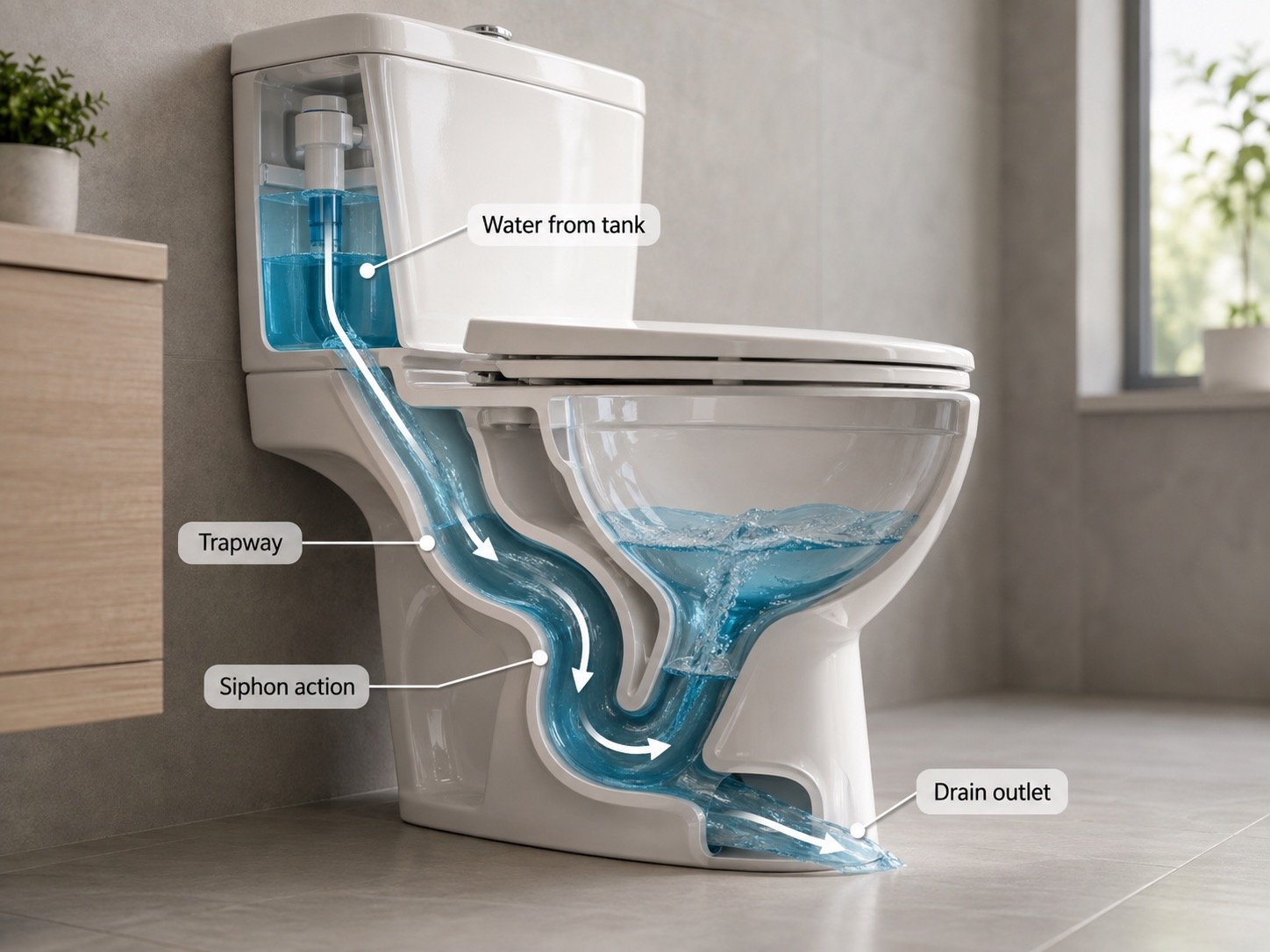
A siphonic toilet uses gravity, water flow, and siphon action to remove waste from the bowl. Instead of relying only on water to push waste toward the drain, the flushing process creates a siphon inside the trapway that helps draw water and waste out of the bowl.
This flushing technology is widely used in modern toilets because it can provide effective waste removal while maintaining a stable water level in the bowl.
Quick Definition
A siphonic toilet uses rapidly flowing water to fill the trapway and create a pressure difference. This produces a siphon that draws water and waste into the drainage system.
How Does a Siphonic Toilet Work?
The flushing process begins when water is released rapidly from the tank into the toilet bowl. As water enters the curved trapway, air is displaced and a siphon begins to form.
What Is a Siphon Jet?
Many siphonic toilets use a siphon jet to help establish the siphon quickly.
The jet directs a concentrated stream of water toward the entrance of the trapway. This helps fill the trapway and accelerate the pressure change required for siphon action.
Good to Know: Not every siphonic toilet requires a visible siphon jet. Different designs may use specialized bowl channels, water paths, and trapway geometry to create the siphon effect.
Siphonic Toilet vs Washdown Toilet
Siphonic and washdown toilets both use water to remove waste, but they use different flushing principles.
| Feature | Siphonic Toilet | Washdown Toilet |
|---|---|---|
| Main Principle | Uses siphon action | Uses direct water flow |
| Waste Removal | Waste is drawn through the trapway | Waste is pushed toward the drain |
| Trapway Role | Helps establish the siphon | Provides a direct waste passage |
| Performance | Depends on siphon and bowl engineering | Depends on water flow and bowl design |
Key Point: Neither flushing system is automatically better. Actual performance depends on bowl geometry, trapway dimensions, water flow, flush valve design, and drainage conditions.
Advantages of a Siphonic Toilet
Effective Waste Removal
Once the siphon is established, the pressure difference helps move water and waste efficiently through the trapway.
Stable Bowl Water Level
The curved trapway retains water in the bowl between flushes and helps maintain the water seal required for normal toilet operation.
Compatible With Modern Designs
Siphonic flushing can be combined with modern bowl-washing systems, larger flush valves, efficient water channels, and water-saving technology.
Possible Disadvantages
Trapway Design Is Critical
The internal passage must balance reliable siphon formation with enough space for waste to move through efficiently.
Water Flow Must Be Well Controlled
The system needs the correct volume and speed of water to establish the siphon. Poorly balanced water flow can reduce flushing performance.
Does a Siphonic Toilet Use More Water?
Not necessarily. Siphonic flushing describes how the toilet removes waste, not how much water it must use.
Modern siphonic toilets can be engineered to operate with efficient flushing volumes. Water consumption depends on the complete system, including the bowl design, trapway, flush valve, and water-flow engineering.
What Should You Check When Choosing a Siphonic Toilet?
| Feature | Why It Matters |
|---|---|
| Trapway | Influences siphon formation and waste passage. |
| Flush Valve | Controls how quickly water enters the bowl. |
| Bowl Wash | Determines how effectively the bowl surface is rinsed. |
| Water Use | Shows the rated flushing volume. |
| Rough-In & Size | Must match the bathroom installation conditions. |
Frequently Asked Questions
What Makes a Toilet Siphonic?
A toilet is siphonic when its flushing system creates a siphon inside the trapway to help draw water and waste out of the bowl.
What Is the Purpose of a Siphon Jet?
A siphon jet directs water toward the trapway to help fill it quickly and establish siphon action.
Is Siphonic Flushing Better Than Washdown?
Not always. Both technologies can perform well when correctly engineered. Overall toilet design is more important than the flushing category alone.
Can a Water-Saving Toilet Use Siphonic Flushing?
Yes. Modern siphonic toilets can be designed to work with reduced flushing volumes while maintaining effective waste removal.
Conclusion
A siphonic toilet uses water flow and pressure changes inside the trapway to create a siphon that helps remove waste from the bowl.
Its performance depends on several connected factors, including trapway geometry, water flow, flush valve design, bowl washing, and water consumption.
Understanding how siphonic flushing works makes it easier to compare different toilet technologies and evaluate real flushing performance rather than relying only on appearance or marketing terms.