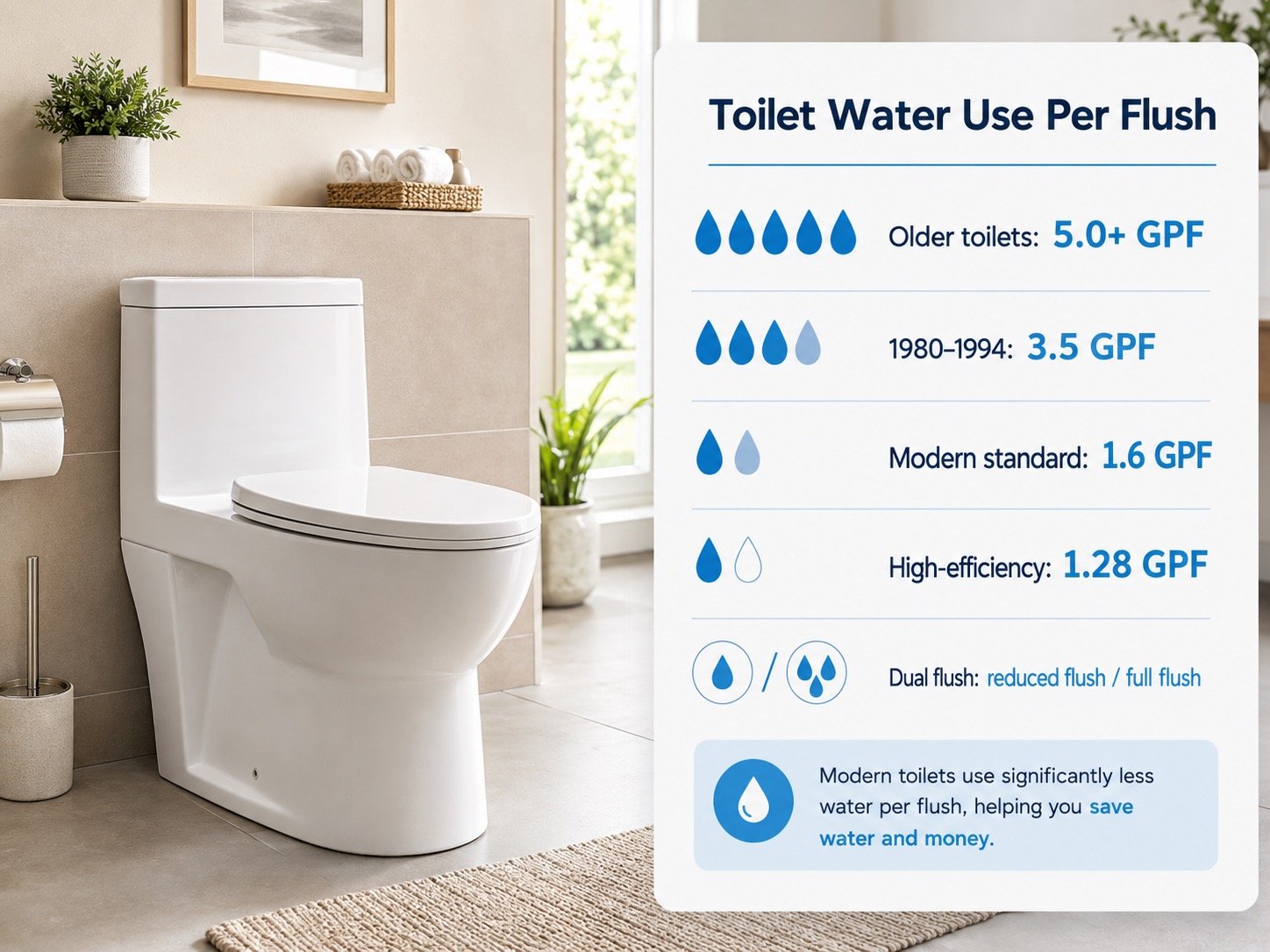
How much water a toilet uses per flush depends on its age, flushing system, and efficiency rating. A modern toilet may use around 1.28 to 1.6 gallons per flush (GPF), while much older toilets can use several gallons more.
Understanding toilet water consumption can help homeowners compare models, estimate water use, and choose a more efficient toilet without sacrificing flushing performance.
Quick Answer
Many modern toilets use 1.28 to 1.6 gallons (about 4.8 to 6.1 liters) per flush. Older toilets may use approximately 3.5, 5, or even more gallons with every flush.
Typical Toilet Water Use by Age
Toilet technology has changed significantly over time. Older toilets generally relied on much larger volumes of water, while modern designs use improved bowl geometry, trapways, flush valves, and water channels to achieve effective flushing with less water.
| Toilet Type / Age | Approx. Water Per Flush |
|---|---|
| Older toilets before 1980 | Around 5 GPF or more |
| Many toilets from 1980–1994 | Around 3.5 GPF |
| Modern standard toilets | Up to about 1.6 GPF |
| High-efficiency toilets | Around 1.28 GPF or less |
Important: These figures are general reference values. Actual water consumption depends on the individual toilet model and its rated flushing volume.
What Does GPF Mean?
GPF means gallons per flush. It tells you how much water a toilet is designed to use during one flushing cycle.
In countries using metric measurements, toilet water consumption may instead be shown as LPF — liters per flush.
| GPF | Approx. LPF |
|---|---|
| 1.28 GPF | About 4.8 L |
| 1.6 GPF | About 6.1 L |
| 3.5 GPF | About 13.2 L |
| 5.0 GPF | About 18.9 L |
What Is a High-Efficiency Toilet?
A high-efficiency toilet (HET) is designed to reduce the amount of water required for each flush while still providing effective waste removal and bowl cleaning.
Modern high-efficiency designs may use approximately 1.28 gallons per flush or less, depending on the model and applicable efficiency standard.
Using less water does not automatically mean weaker flushing. Modern toilets can improve performance through better engineering rather than simply increasing water volume.
How Can Modern Toilets Flush With Less Water?
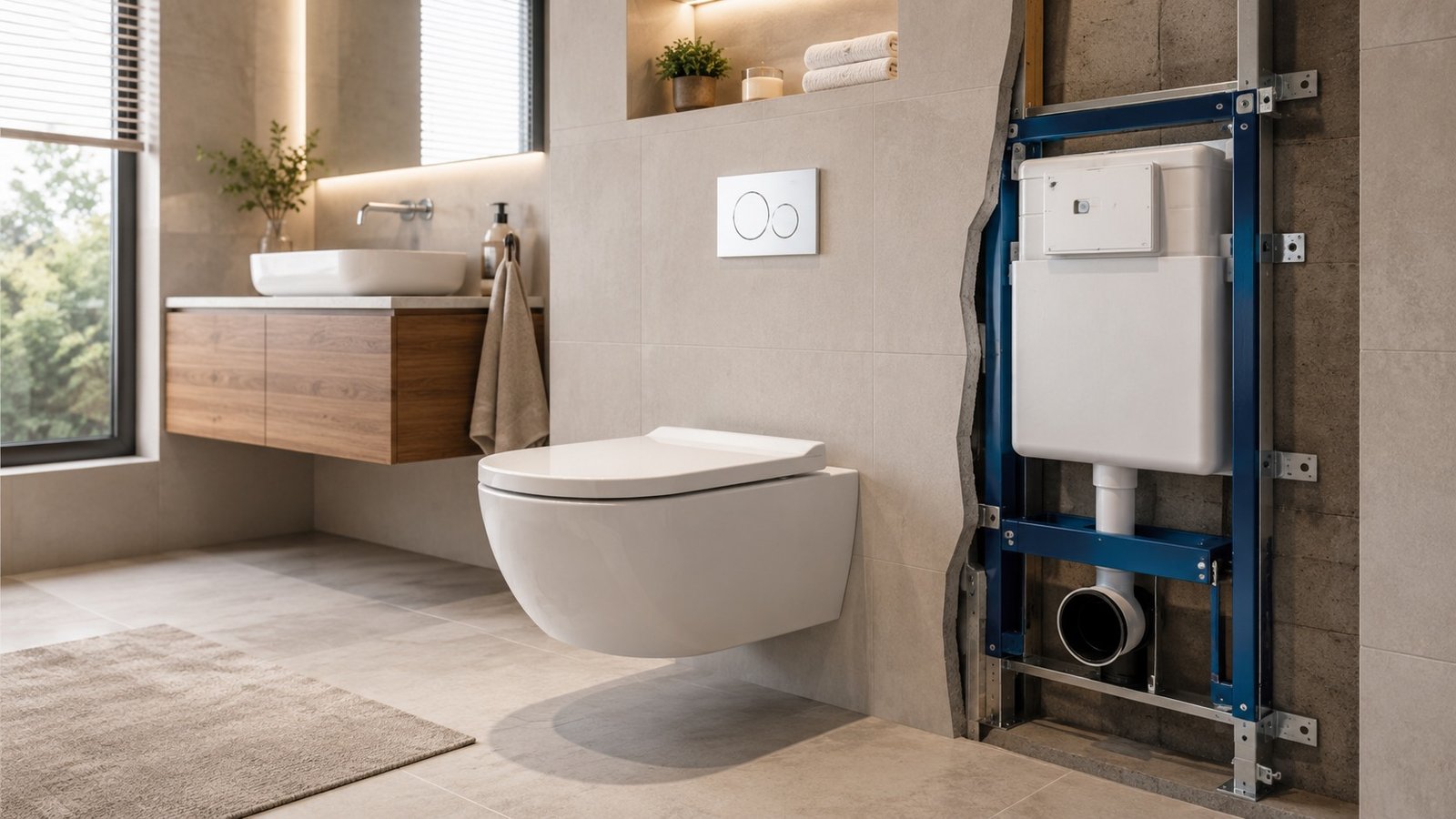
Older toilets often depended heavily on water volume. Modern models can use several design improvements to move waste effectively with less water.
Larger or Faster Flush Valves
Releasing water more efficiently can increase flow speed without requiring a much larger volume of water.
Improved Trapway Design
The shape and surface of the trapway influence how efficiently waste moves from the bowl into the drainage system.
Optimized Bowl Geometry
Carefully designed water channels and bowl shapes direct flushing water where it is needed most.
Siphonic or Washdown Engineering
Different flushing technologies can use water flow, gravity, and pressure changes to remove waste efficiently.
How Much Water Does a Dual Flush Toilet Use?
A dual flush toilet provides two flushing options instead of one.
| Flush Mode | Typical Purpose |
|---|---|
| Reduced Flush | Generally used for liquid waste and uses less water. |
| Full Flush | Generally used for solid waste and uses a larger flushing volume. |
The exact water volume of each mode varies by toilet design, so the manufacturer’s rated LPF or GPF should always be checked.
Not necessarily. Flush performance depends on the complete system — including water velocity, flush valve design, trapway geometry, bowl washing, and drainage — rather than water volume alone.
How to Estimate Toilet Water Use
To estimate how much water a toilet uses over time, use a simple formula:
Flush Volume × Number of Flushes = Total Water Use
For example, a toilet used frequently in a home, hotel, office, or other building can consume a significant amount of water over a year. Even a small reduction in water used per flush can therefore produce meaningful long-term savings.
What Should You Check When Choosing a Water-Efficient Toilet?
| Feature | Why It Matters |
|---|---|
| GPF / LPF | Shows the rated water consumption per flush. |
| Flush System | Influences waste removal and water efficiency. |
| Trapway Design | Affects waste passage and flushing performance. |
| Bowl Cleaning | Efficient water distribution helps clean more of the bowl surface. |
| Single or Dual Flush | Dual flush provides different water volumes for different uses. |
Frequently Asked Questions
How Many Gallons Does a Modern Toilet Use Per Flush?
Many modern toilets use between approximately 1.28 and 1.6 gallons per flush, although actual consumption depends on the specific model.
How Much Water Does an Old Toilet Use?
Older toilets may use approximately 3.5 to 5 gallons per flush, while some very old designs can use even more.
Is 1.28 GPF Enough to Flush a Toilet?
Yes, when the toilet is properly engineered. Modern bowl geometry, water channels, flush valves, and trapway design can provide effective flushing with lower water volumes.
Does a Dual Flush Toilet Save Water?
It can. A dual flush toilet allows a reduced-volume flush for liquid waste and a full flush when more water is required.
Conclusion
So, how much water does a toilet use per flush? Modern toilets commonly use around 1.28 to 1.6 gallons per flush, while older toilets may use 3.5 gallons, 5 gallons, or more.
Lower water consumption does not necessarily mean weaker performance. Modern toilets rely on improved flush valves, bowl geometry, trapways, and water-flow design to use water more effectively.
When comparing toilets, check both the rated GPF or LPF and the overall flushing system. The best toilet is not simply the one that uses the least water, but one that combines efficient water use with reliable flushing performance.