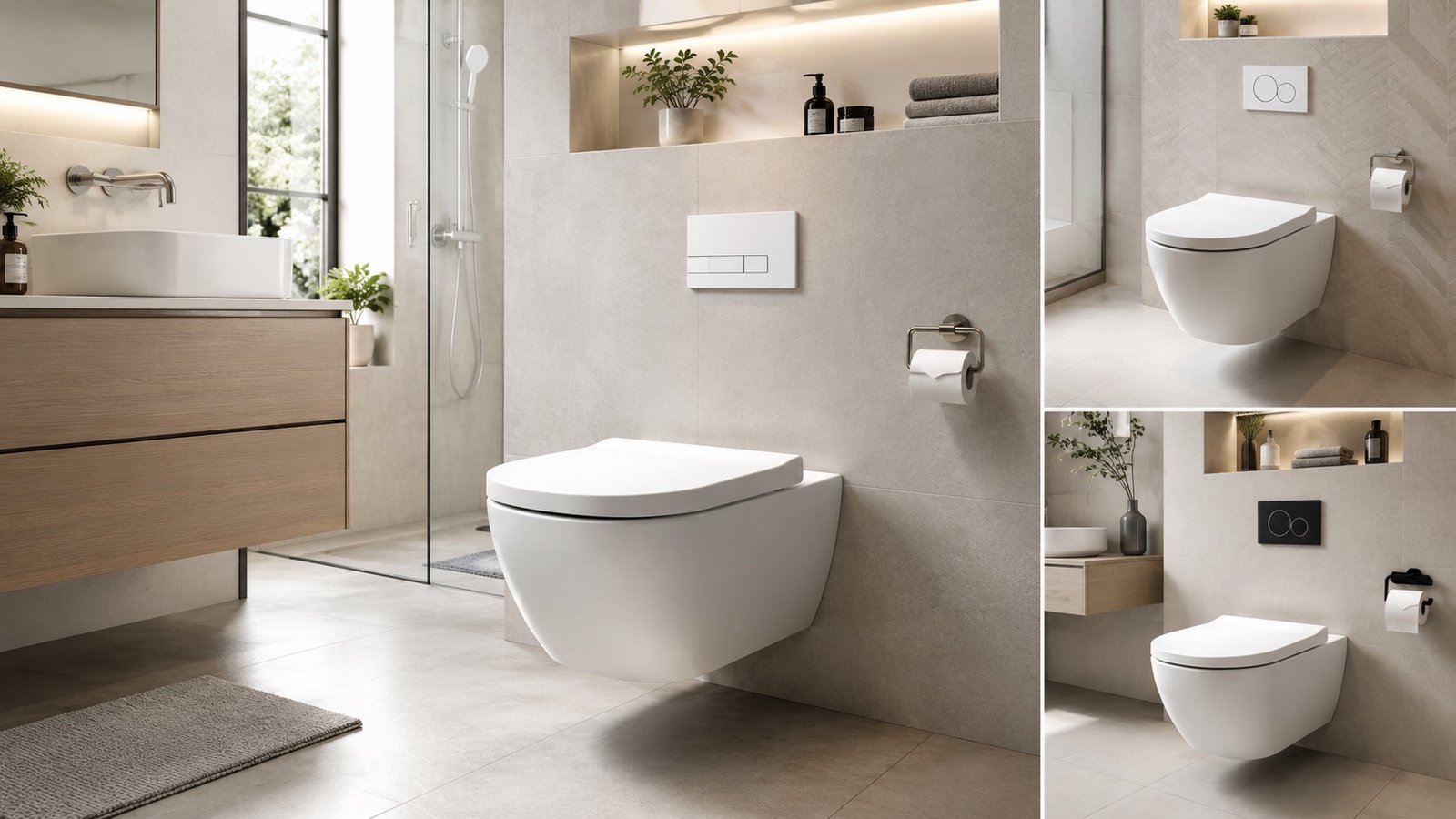
Wall hung toilets have become a popular choice in modern bathroom design, prized for their sleek, floating appearance and space-saving profile. Unlike a traditional floor-mounted toilet, a wall hung model has its tank concealed inside the wall, with only the bowl visible, appearing to float a few inches above the floor. This look is undeniably striking — but it also comes with real trade-offs in installation complexity, maintenance access, and cost. Before choosing a wall hung toilet for a renovation or new build, it’s worth understanding exactly what you’re gaining and what you’re giving up.
In this guide
What a wall hung toilet is · Pros of wall hung toilets · Cons of wall hung toilets · Wall hung vs floor-mounted at a glance · Who should consider one · FAQ
What Is a Wall Hung Toilet?
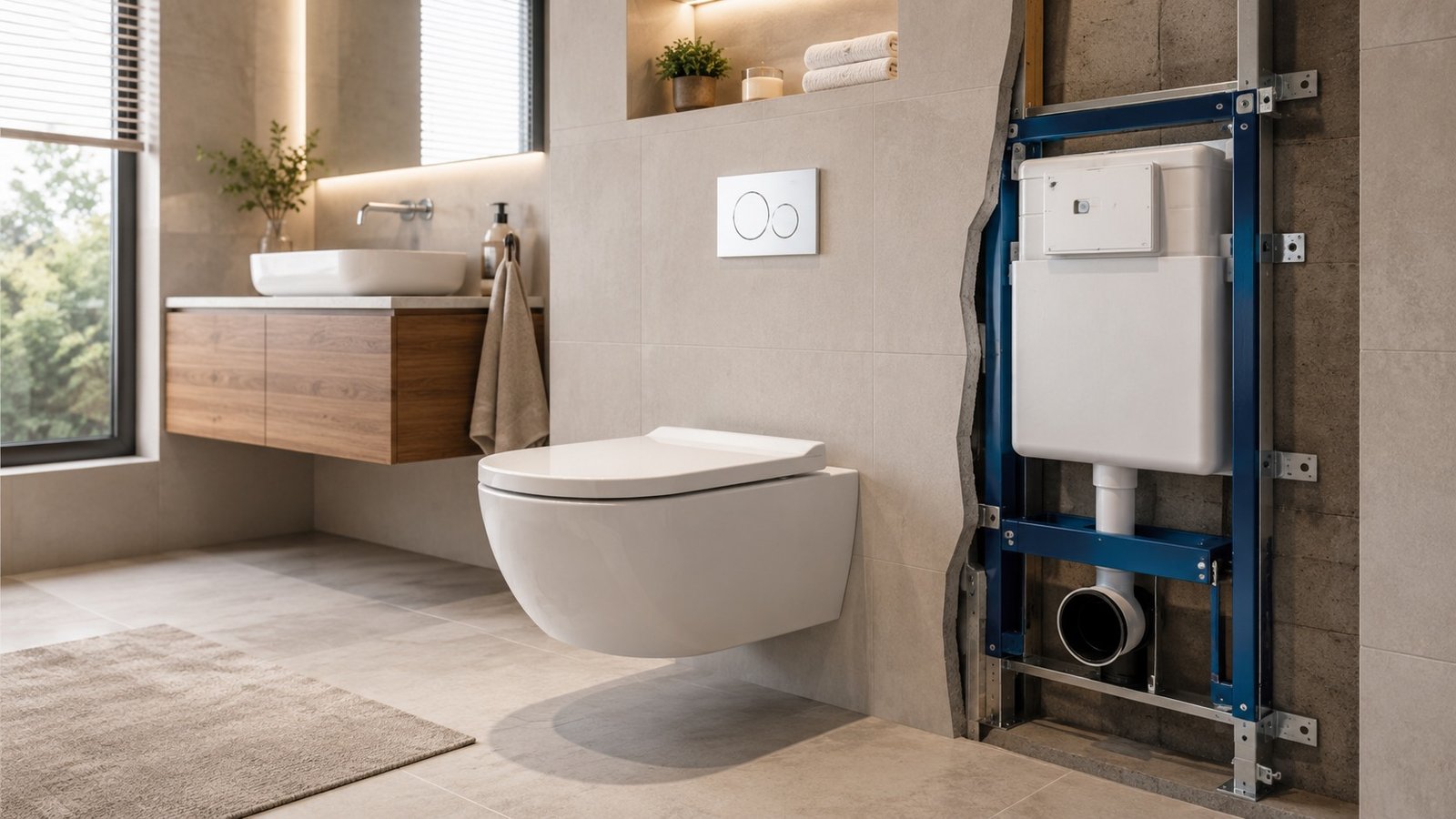
A wall hung toilet consists of two main parts: the visible ceramic bowl, which mounts directly to the wall using a concealed steel carrier frame, and the flush tank and cistern, which are installed inside the wall cavity behind the finished surface. Only a flush plate is visible on the wall above the bowl. Because the tank and plumbing connections are hidden, the toilet appears to “float,” and the floor beneath it remains completely open — a look commonly associated with high-end, contemporary bathroom design.
Pros of a Wall Hung Toilet
Easier floor cleaning
With no pedestal touching the floor, there is no hard-to-reach base to clean around. Mopping and cleaning become faster, and dust or moisture no longer collects at the toilet’s foot.
Space-saving, modern appearance
The floating bowl visually opens up small bathrooms and creates a clean, minimalist look that pairs well with contemporary design schemes.
Adjustable mounting height
Because the bowl attaches to a carrier frame rather than sitting directly on the floor, installers can set the bowl at a custom height — useful for accessibility needs or households with a mix of adult and child users.
Quieter flush
The tank is enclosed within the wall cavity, which helps dampen the sound of the tank refilling after each flush compared to an exposed floor-mounted tank.
Cons of a Wall Hung Toilet
Higher installation complexity and cost
A wall hung toilet requires a wall cavity large enough to house the carrier frame and tank, along with reinforced framing to support the bowl’s weight. This typically means more labor and a higher upfront installation cost than a standard floor-mounted toilet, especially in a renovation where the wall must be opened up.
Harder access for repairs
Since the tank and internal components sit inside the wall, fixing a leak or replacing a fill valve usually means removing an access panel or, in some cases, opening the wall — a more involved repair than lifting a standard tank lid.
Weight limits on the carrier frame
The concealed steel frame that supports the bowl has a rated weight capacity. While this is sufficient for standard use, it’s a specification worth confirming for commercial or high-traffic installations such as hotels and public restrooms.
Not always retrofit-friendly
Converting an existing bathroom from a floor-mounted to a wall hung toilet often requires relocating plumbing inside the wall, which adds cost and construction time to a renovation compared to a like-for-like floor toilet replacement.
Wall Hung vs Floor-Mounted: At a Glance
| Factor | Wall Hung Toilet | Floor-Mounted Toilet |
|---|---|---|
| Installation Cost | Higher, requires wall framing and carrier | Lower, standard installation |
| Floor Cleaning | Very easy, no base to clean around | Standard, base requires regular cleaning |
| Repair Access | Requires access panel or wall opening | Simple, tank lid lifts off directly |
| Visual Style | Modern, minimalist, floating look | Traditional, widely compatible with any style |
| Best For | New builds, renovations with wall access, small bathrooms | Most standard installations and budgets |
Who Should Consider a Wall Hung Toilet?
Wall hung toilets tend to make the most sense in specific project situations rather than as a universal upgrade. They are a strong fit for new construction or full renovations where the wall is already open, for small bathrooms where floor space and visual openness matter, and for hospitality or high-end residential projects where a sleek, modern aesthetic is a priority. They are a less practical choice for quick, budget-conscious toilet replacements, or for bathrooms where opening the wall isn’t feasible without significant additional construction work.
Frequently Asked Questions
Are wall hung toilets strong enough for everyday use?
Yes. Wall hung toilets are supported by a rated steel carrier frame designed to hold significant weight, and they are commonly installed in both residential and commercial settings, including hotels and public facilities.
Do wall hung toilets cost more in the long run?
Upfront installation typically costs more due to the carrier frame and wall preparation involved. Long-term costs depend on maintenance needs, though the concealed tank generally requires less frequent attention than an exposed one.
Can a wall hung toilet be installed in any bathroom?
Not always. It requires a wall with enough depth and structural support for the carrier frame and in-wall tank, which is more straightforward in new construction than in an existing bathroom with a thin or non-load-bearing wall.
Final Thoughts
A wall hung toilet offers a genuinely modern look, easier floor cleaning, and flexible mounting height, but it comes with higher installation costs and less convenient access for repairs. The right choice ultimately depends on the scope of the project: new construction and full renovations are well suited to take advantage of a wall hung system, while quick replacements or budget-sensitive projects may be better served by a traditional floor-mounted toilet. Weighing these trade-offs before construction begins is the best way to avoid surprises once the wall is already closed up.