A wobbly, cracked, or discolored toilet seat is one of the most common small annoyances in any bathroom — and one of the easiest to fix, if you know what’s actually wrong. Sometimes a loose hinge or a worn bumper is all that’s causing the problem, and a simple repair solves it in minutes. Other times, the seat itself has degraded to the point where replacement is the only sensible option. Knowing the difference can save unnecessary spending, or prevent you from wasting time repairing something that’s better off replaced.
In this guide
Typical toilet seat replacement costs · Signs you can repair instead of replace · Signs you need a full replacement · DIY vs professional installation · How to choose a replacement seat · FAQ
Typical Toilet Seat Replacement Costs
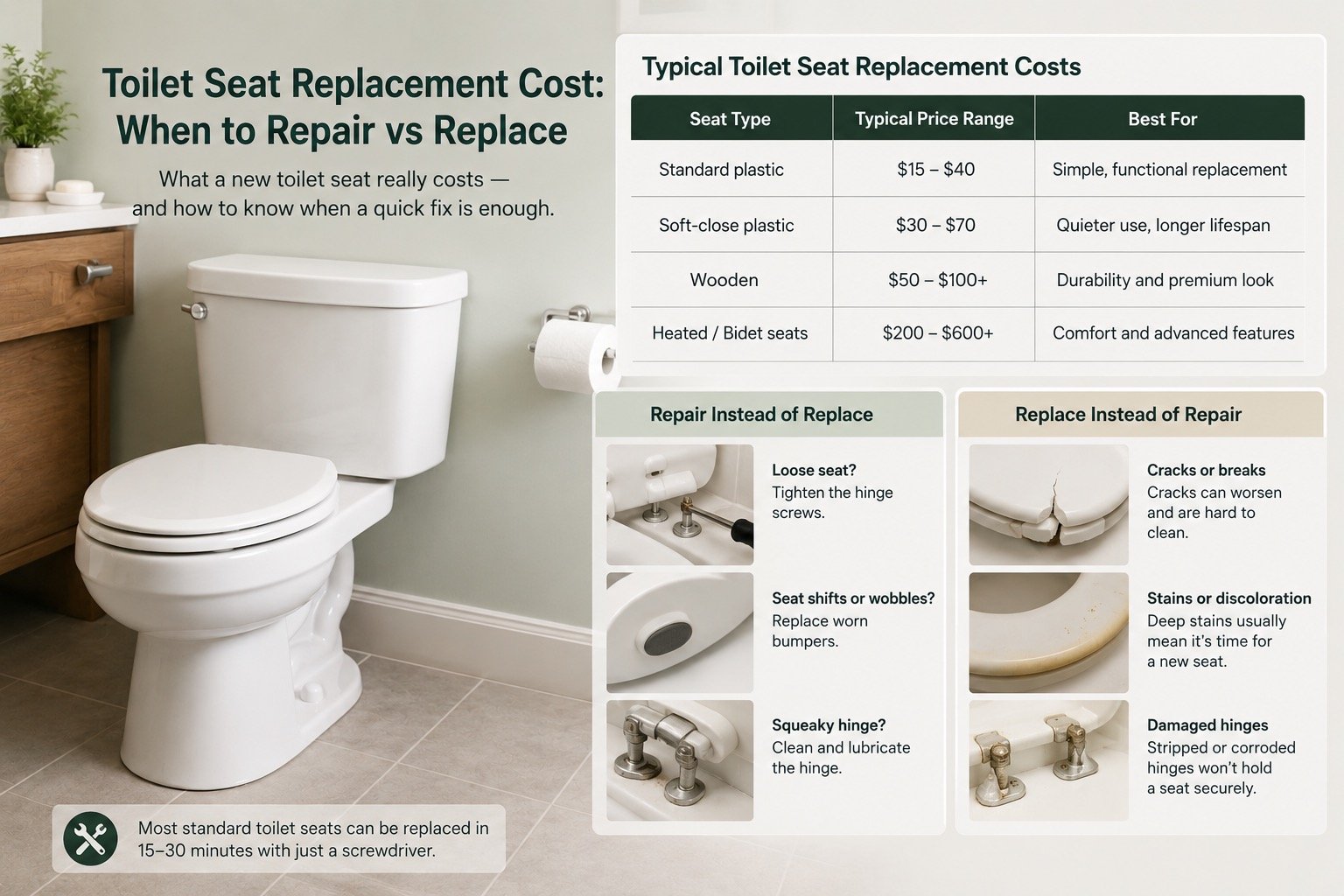
Toilet seat prices vary widely depending on material, features, and brand, but most fall into a few general tiers. Basic plastic seats are the most affordable option and cover the majority of standard replacements. Mid-range seats often add features like soft-close hinges, which prevent slamming and extend the seat’s lifespan. Premium seats — including wooden, heated, or bidet-integrated models — sit at the top of the range and are usually chosen for comfort or specific functionality rather than basic replacement needs.
| Seat Type | Typical Price Range | Best For |
|---|---|---|
| Standard plastic | Budget-friendly, entry-level | Simple, functional replacement |
| Soft-close | Moderate | Quieter use and longer hinge lifespan |
| Wood or molded wood | Moderate to higher | Warmer feel, traditional appearance |
| Heated or bidet-integrated | Highest | Added comfort and functionality |
Installation cost, if hiring a professional, is usually modest on top of the seat price itself, since replacing a toilet seat is one of the simplest bathroom repairs to perform.
Signs You Can Repair Instead of Replace
Not every issue requires a brand-new seat. These common problems can often be fixed quickly and cheaply:
Loose or wobbly seat: Usually caused by loosened mounting bolts, which can be tightened in minutes with a screwdriver or wrench.
Worn bumpers: The small rubber stops that keep the seat from sliding can be replaced individually and are inexpensive to source.
Squeaking hinges: Often resolved by cleaning and lubricating the hinge mechanism rather than replacing the entire seat.
Signs You Need a Full Replacement
Some damage goes beyond a simple fix and signals that replacement is the more practical option:
Visible cracks: Cracked plastic or wood can pinch skin, harbor bacteria in the crack lines, and will typically worsen over time rather than stabilize.
Persistent staining or discoloration: Once a seat’s surface has absorbed stains or lost its finish, cleaning products can no longer restore its original appearance.
Broken or stripped hinges: If the hinge mechanism itself is broken rather than simply loose, it typically cannot be repaired and must be replaced as part of the full seat assembly.
Persistent odor: Porous materials, especially older wood seats, can absorb odor over years of use in a way that cleaning cannot fully reverse.
DIY Replacement vs Hiring a Professional
Replacing a toilet seat is one of the most beginner-friendly bathroom repairs, and most homeowners can complete it without professional help. The process generally involves removing two mounting bolts (often located under decorative caps at the back of the seat), lifting off the old seat, and securing the new one in the same position. A basic screwdriver or wrench is usually all that’s required. Hiring a professional makes more sense mainly when the mounting bolts are corroded or stripped, or as part of a larger bathroom renovation where a contractor is already handling multiple fixtures.
Measure your existing seat’s shape (round or elongated) and bolt spacing before ordering a replacement.
Check whether your toilet uses top-mount or bottom-mount hinge bolts, since replacement seats are designed for one or the other.
If bolts are rusted in place, a penetrating lubricant can help loosen them before attempting removal.
How to Choose the Right Replacement Seat
Beyond fixing the immediate problem, replacing a toilet seat is also a chance to upgrade comfort and durability. Soft-close hinges are worth the modest price difference for most households, since they prevent slamming and reduce wear over time. Material choice matters too: molded wood and plastic composites tend to resist staining and cracking better than older solid wood designs, while shape and size must match the existing bowl exactly — round bowls and elongated bowls require different seat dimensions, and mounting the wrong shape will leave gaps or overhang.
Frequently Asked Questions
How long does a toilet seat usually last?
With normal household use, a quality toilet seat typically lasts several years before hinges wear out or the surface shows significant wear. Heavier daily use, such as in a commercial or rental property, may shorten that lifespan.
Is it worth repairing an old seat instead of replacing it?
If the issue is limited to loose bolts, worn bumpers, or a squeaky hinge, repair is usually the more cost-effective choice. Once cracking, staining, or hinge failure sets in, replacement becomes the better long-term option.
Do all toilet seats fit all toilets?
No. Seats are designed to match either a round or elongated bowl shape, and bolt spacing can vary slightly between manufacturers. Measuring the existing seat and bowl before ordering helps ensure a proper fit.
Final Thoughts
Most toilet seat problems fall into one of two categories: a quick, inexpensive repair, or a full replacement that’s simple enough to handle without professional help. Tightening bolts, replacing bumpers, or lubricating hinges can solve minor annoyances in minutes, while cracks, persistent stains, or broken hinges call for a new seat entirely. Either way, the fix is one of the most affordable and accessible bathroom repairs a homeowner can make.