For a compact bathroom, choosing a wall hung toilet is not simply about selecting the smallest bowl. The best project solution balances visible dimensions, concealed installation space, flushing performance, cleaning access, maintenance and long-term usability.
Why Wall Hung Toilets Work Well in Small Bathrooms
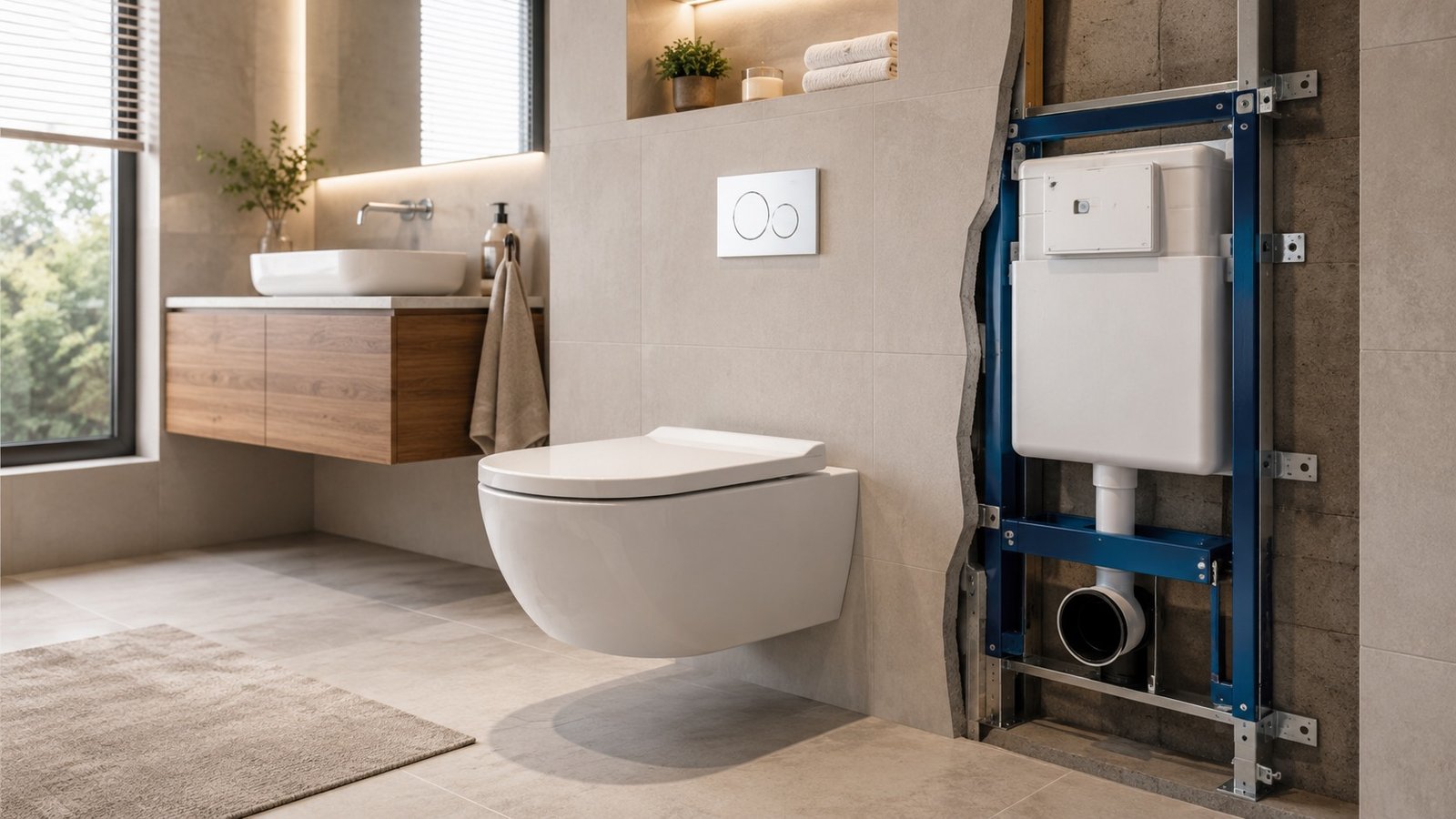
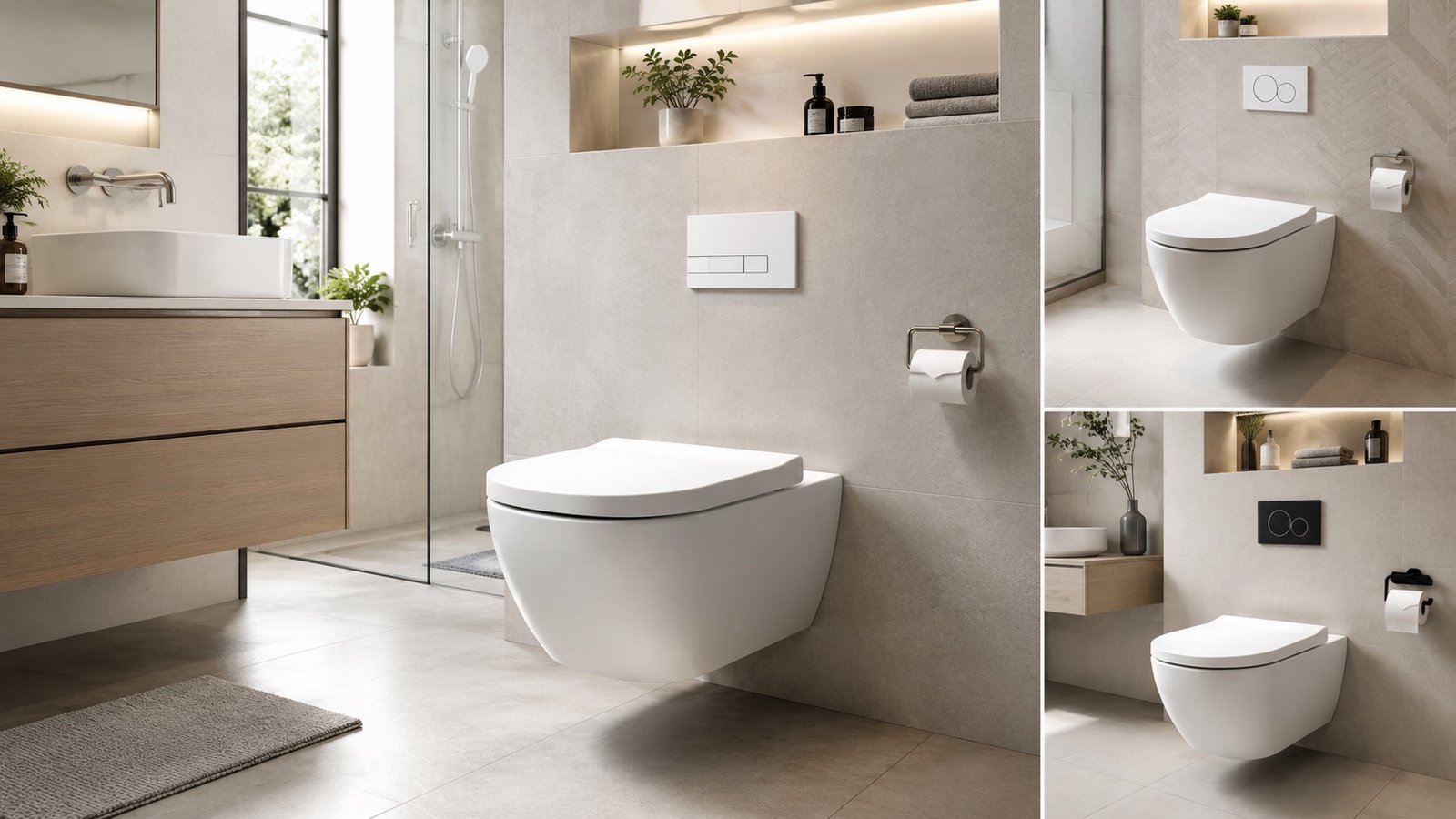
A wall hung toilet places the bowl above the finished floor while the cistern and supporting structure are concealed behind the wall. This changes how a small bathroom feels because the eye can see more uninterrupted floor surface.
The space-saving benefit should not be judged only by the bowl depth. A compact bowl can project less into the room, but the concealed carrier and cistern also require installation depth inside or in front of the wall. For this reason, the best choice depends on the complete bathroom layout rather than the toilet bowl alone.
More Open Floor Area
Because the bowl does not sit on a pedestal, more flooring remains visible. This can make narrow bathrooms, guest bathrooms and hotel bathrooms look less crowded.
Easier Floor Maintenance
The open space below the bowl is easier to mop and clean, which can be valuable in apartments, hotels and other projects with frequent housekeeping.
Flexible Mounting Height
During installation, the bowl height can often be planned around the project requirements, provided that the carrier system and finished wall design allow it.
Less Visual Clutter
Concealing the cistern and plumbing creates a cleaner architectural line, which is especially useful when the room already contains a shower, vanity and storage in a limited footprint.
Buyer’s Comparison: Which Wall Hung Toilet Type Is Best?
| Configuration | Best For | Main Advantage | What Buyers Should Check |
|---|---|---|---|
| Compact Wall Hung Toilet | Small apartments, powder rooms, narrow bathrooms | Reduced bowl projection and cleaner floor space | Overall bowl depth, user comfort and carrier compatibility |
| Rimless Wall Hung Toilet | Hotels, apartments, residential renovations | Easier bowl cleaning and fewer hidden rim surfaces | Flush distribution, bowl geometry and glaze quality |
| Dual Flush Wall Hung Toilet | Multi-unit housing and water-conscious projects | Two flushing-volume options | Cistern specification, flush plate and local efficiency requirements |
| Square / Architectural Bowl | Modern hotels, villas and design-led bathrooms | Strong contemporary appearance | Seat comfort, projection and cleaning around corners |
| Wall Hung Smart Toilet | Premium apartments and upscale hospitality | Combines suspended installation with smart functions | Electrical supply, service access, installation space and maintenance planning |
1. Start With Bowl Projection, Not Just Width
In a narrow bathroom, the distance that the toilet projects from the finished wall is often more important than its width. A shorter projection may improve clearance in front of the toilet and make circulation easier around the vanity or shower door.
However, an extremely short bowl is not automatically better. Buyers should balance compact dimensions with comfortable seating geometry. For hotel and apartment projects, a toilet that is slightly longer but more comfortable may perform better over years of daily use than the smallest possible design.
2. Rimless vs. Traditional Bowl Design
Rimless wall hung toilets remove the enclosed rim channel commonly found around the top of a traditional toilet bowl. Instead, flushing water is directed around the exposed bowl surface through an engineered water path.
For compact bathrooms, this design has a practical advantage: the toilet can be easier to inspect and wipe clean. In hospitality or rental projects, easier cleaning can reduce housekeeping effort and help maintain a more consistent appearance.
When Rimless Makes the Most Sense
- Hotel and serviced-apartment bathrooms with frequent cleaning cycles.
- Residential projects where hygiene and easy maintenance are priorities.
- Modern interiors where a simple, uncluttered bowl design is preferred.
- Projects specifying wall mounted fixtures across multiple bathroom types.
3. Concealed Cistern Depth Can Decide the Entire Layout
A wall hung toilet depends on a concealed cistern and carrier frame. These components sit behind the finished wall and support the ceramic bowl. In a new build, the wall can usually be planned around the system. In a renovation, available wall depth may be much more restrictive.
A buyer should therefore treat the toilet bowl, carrier frame, cistern and flush plate as one installation system. Compatibility matters more than choosing each component independently.
Before Ordering, Confirm:
- Available wall cavity or service-wall depth
- Carrier frame dimensions
- Waste outlet position
- Water inlet arrangement
- Finished mounting height
- Flush plate compatibility
- Access for maintenance
- Finished wall thickness
4. Dual Flush Is Useful, but System Matching Matters More
Dual-flush systems allow users to select between lower and higher flush volumes. They are common in apartment, hotel and commercial bathroom projects where water efficiency is part of the specification.
The bowl and concealed cistern must work together correctly. A high-quality ceramic bowl cannot compensate for a poorly matched flushing system. Buyers should review the complete flushing configuration, including cistern output, water path, outlet geometry and the intended flush volume.
5. Cleaning and Maintenance Should Influence the Purchase
The visible ceramic surface of a wall hung toilet is generally straightforward to clean because there is no floor-mounted base. The concealed components, however, require a different maintenance strategy.
Good projects provide service access through the flush plate opening or another planned access point. This allows key cistern components to be inspected or serviced without unnecessary damage to the finished wall.
| Maintenance Area | What to Evaluate | Why It Matters |
|---|---|---|
| Bowl Exterior | Smooth form with limited joints and recesses | Faster everyday cleaning |
| Bowl Interior | Rimless geometry and smooth glaze | Reduces difficult-to-reach surfaces |
| Seat | Quick-release and soft-close options | Simplifies cleaning and replacement |
| Cistern | Accessible service components | Supports long-term maintenance |
| Flush Plate | Correct compatibility and access size | Can function as the primary service opening |
6. Best Choice by Small Bathroom Project Type
Small Apartment Bathroom
A compact rimless wall hung toilet is usually a strong all-around option. Prioritize moderate projection, cleaning convenience and a reliable concealed cistern system.
Hotel Guest Bathroom
Focus on cleaning efficiency, standardized installation, replaceable seats and service access. A rimless dual-flush configuration can be especially practical where many identical rooms are being fitted.
Powder Room or Guest WC
Visual space may be the main objective. A short-projection wall mounted toilet can keep the room from feeling crowded while maintaining a minimalist appearance.
Premium Small Bathroom
An architectural wall hung bowl or wall hung smart toilet can add more design value, but electrical requirements, concealed space and after-sales maintenance should be planned before selection.
Multi-Unit Residential Development
Consistency is critical. Buyers should prioritize standardized rough-in requirements, dependable carrier systems, stable ceramic dimensions and components that remain serviceable across the entire project.
7. What Professional Buyers Should Compare Before Ordering
For contractors, distributors, developers and hotel purchasing teams, unit price is only one part of the comparison. The lowest-cost ceramic bowl can become expensive if it causes installation changes, inconsistent rough-ins or difficult maintenance.
| Buying Factor | Questions to Ask |
|---|---|
| Dimensions | What are the width, height and projection from the finished wall? |
| Installation | Which carrier frame and concealed cistern are compatible? |
| Drainage | What outlet configuration and rough-in position are required? |
| Flushing | Is the bowl designed for single or dual flush, and what flush volumes are intended? |
| Cleaning | Is the bowl rimless? Is the seat easy to remove? |
| Maintenance | Can cistern components be serviced through the flush plate opening? |
| Project Supply | Can the supplier maintain consistent dimensions, glaze appearance and packaging across the order? |
| Replacement Parts | Are seats, flush components and related parts available for future maintenance? |
Common Buying Mistakes in Small Bathroom Projects
Choosing by Bowl Size Alone
The concealed frame and finished service wall may add depth. Compare the complete installed system.
Ignoring Maintenance Access
A clean design is valuable only when the concealed system can still be serviced efficiently.
Mixing Incompatible Components
The bowl, carrier, cistern, outlet connection and flush plate should be treated as a coordinated system.
Prioritizing Appearance Over Project Use
A dramatic bowl design may suit a villa but be less practical for high-frequency hotel cleaning or standardized apartment construction.
FAQ: Wall Hung Toilets for Small Bathrooms
Are wall hung toilets really better for small bathrooms?
They can be. The suspended bowl exposes more floor and can reduce visual bulk. The actual space benefit depends on bowl projection and the depth required for the concealed cistern and carrier.
What type of wall hung toilet is easiest to clean?
A rimless wall hung toilet with a smooth ceramic form and quick-release seat is generally easier to clean because there are fewer concealed surfaces around the bowl and no floor-mounted pedestal.
Is a short-projection toilet always the best choice?
No. Short projection can improve clearance, but comfort, flushing geometry and the complete installed depth should also be considered.
Can a wall hung toilet be installed during a renovation?
Yes, but the project must accommodate a carrier frame, concealed cistern, drainage connection and service access. Renovations often require more careful wall-depth planning than new construction.
Should hotel projects choose rimless wall hung toilets?
Rimless models can be particularly useful in hotels because cleaning access is straightforward. Buyers should still compare flushing performance, component compatibility and maintenance access.
What is the most important specification for a project buyer?
There is no single specification. The most reliable decision comes from checking the complete system: ceramic dimensions, carrier, cistern, rough-in, flushing, service access and replacement components.
Final Comparison: What Is the Best Wall Hung Toilet for a Small Bathroom?
For most compact residential, apartment and hotel bathrooms, a compact rimless wall hung toilet with a compatible concealed cistern and accessible service system offers the best balance of space efficiency, cleaning convenience and modern appearance.
For high-volume projects, buyers should go beyond appearance and compare installation dimensions, rough-in requirements, flushing performance, component compatibility, maintenance access and supply consistency. The best wall hung toilet is not simply the smallest model—it is the model that fits the entire bathroom system with the fewest compromises.