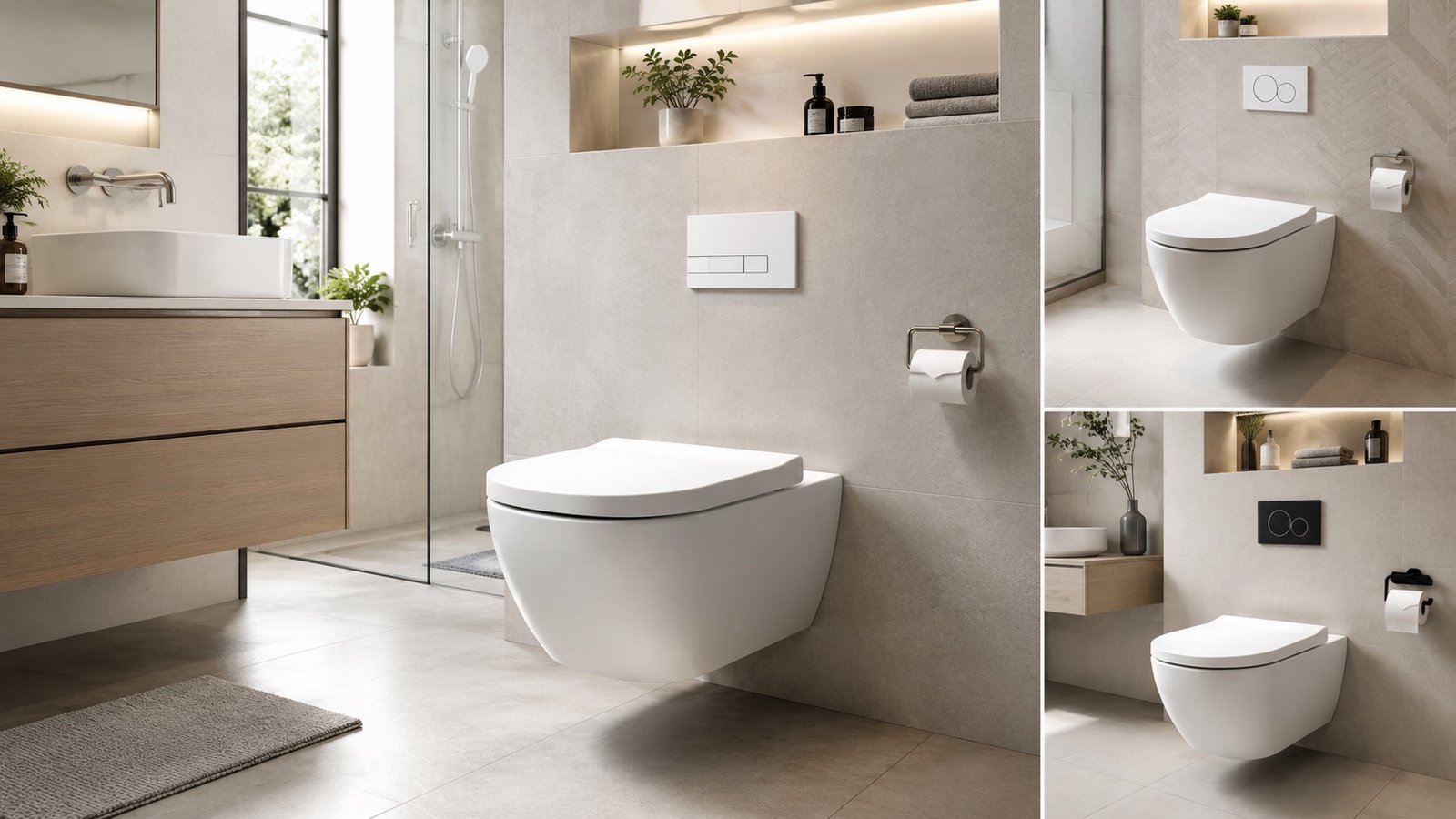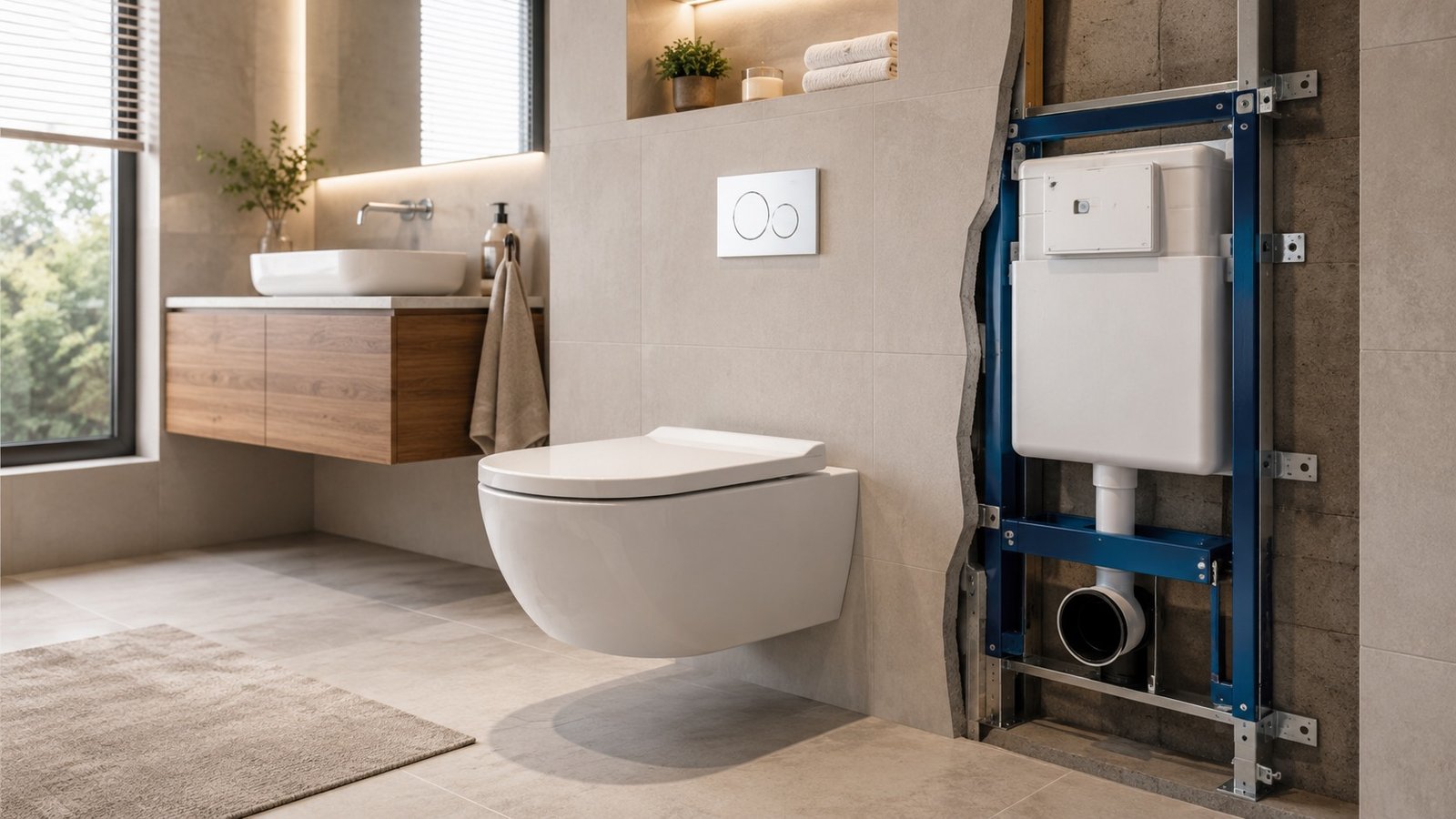
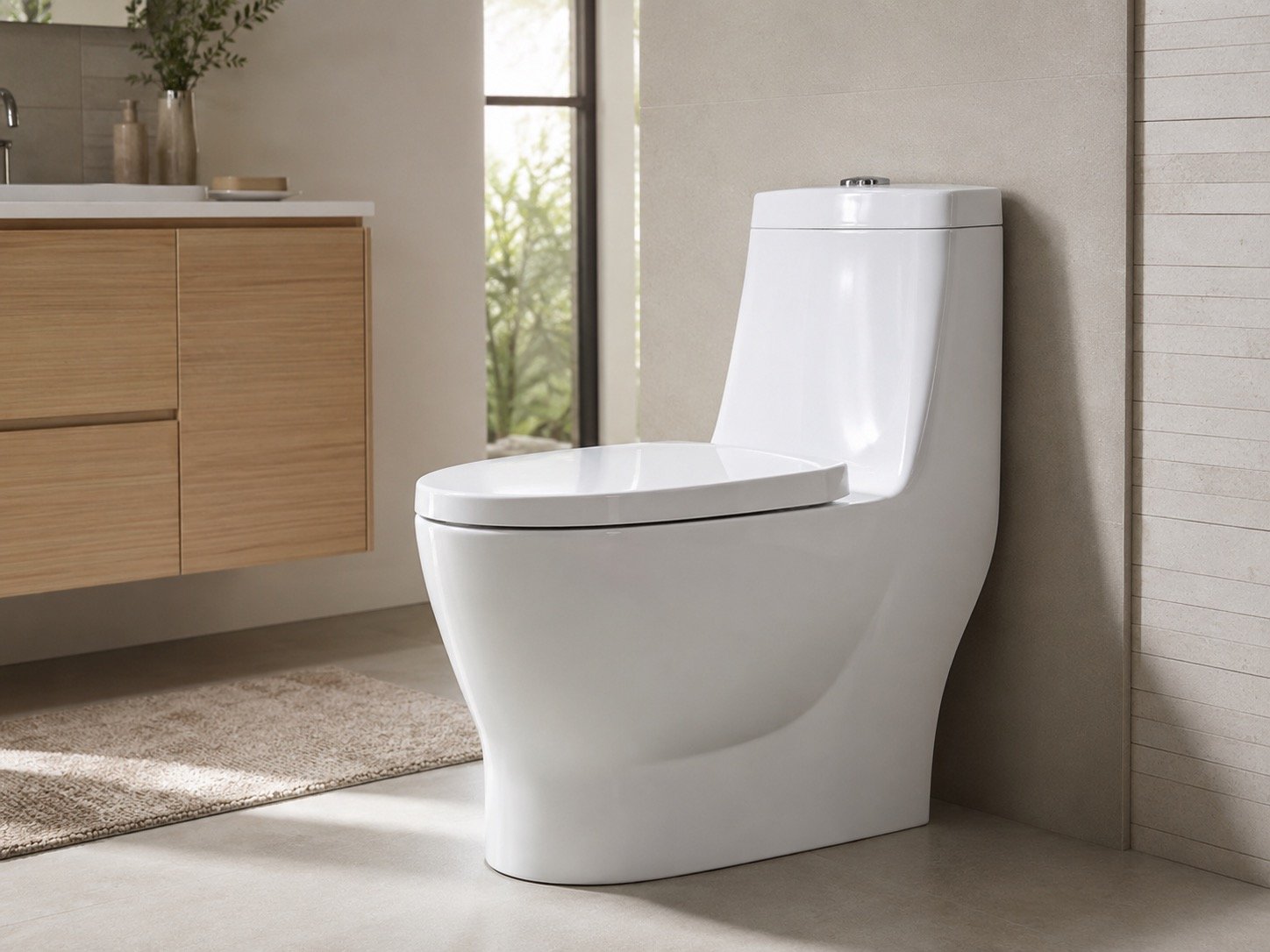
A one piece toilet combines the toilet tank and bowl into one integrated ceramic fixture. Compared with a traditional two piece toilet, it has fewer visible joints, a smoother appearance, and is generally easier to clean.
But does a one piece toilet flush better? Is it easier to maintain? And what should you check before choosing one? This guide explains the basic structure, working principle, advantages, disadvantages, and key buying considerations.
Quick Definition: A one piece toilet has the tank and bowl manufactured as one continuous ceramic body, while a two piece toilet uses a separate tank attached to the bowl during installation.
How Does a One Piece Toilet Work?
A one piece toilet works in much the same way as other tank-type toilets. Water is stored inside the tank and released rapidly into the bowl when the flush mechanism is activated.
| Step | What Happens |
|---|---|
| 1. Fill | The tank fills with water after the previous flush. |
| 2. Flush | The flush valve opens and releases stored water. |
| 3. Clean | Water flows through the bowl and moves waste toward the outlet. |
| 4. Drain | Waste passes through the trapway into the drainage system. |
| 5. Refill | The tank refills and prepares for the next flush. |
One piece construction does not determine the flushing technology. A one piece toilet may use a siphonic, washdown, dual-flush, rimless, or other flushing system.
One Piece Toilet vs Two Piece Toilet
The biggest difference is how the ceramic body is constructed. Both designs can provide reliable performance when properly engineered.
| Feature | One Piece Toilet | Two Piece Toilet |
|---|---|---|
| Construction | Integrated tank and bowl | Separate tank and bowl |
| Cleaning | Generally easier | More joints and gaps |
| Weight | Heavier as one unit | Easier to carry separately |
| Appearance | Smooth and modern | More traditional |
| Price | Often higher | Often more economical |
Advantages of a One Piece Toilet
1. Easier to Clean
Because there is no external joint between the tank and bowl, there are fewer gaps where dust, moisture, and dirt can collect.
2. Modern Appearance
The integrated ceramic body creates a smooth, streamlined look that works particularly well in contemporary bathrooms.
3. Fewer External Connections
A one piece toilet eliminates the external tank-to-bowl joint found on traditional two piece toilets.
4. Compatible With Modern Features
One piece toilets can include dual flush, rimless flushing, concealed trapways, soft-close seats, bidet functions, and smart controls.
Disadvantages of a One Piece Toilet
1. Heavier to Handle
The tank and bowl must be moved together, which can make transportation and installation more difficult.
2. Usually More Expensive
One piece models are often priced higher than basic two piece toilets because of their integrated construction and modern styling.
3. Ceramic Parts Cannot Usually Be Replaced Separately
If the main ceramic body is seriously damaged, replacing only the tank or bowl is generally not possible.
Does a One Piece Toilet Flush Better?
Not necessarily. The construction of the toilet does not automatically determine flushing performance.
- Flush valve design
- Water volume and flow speed
- Bowl geometry
- Trapway size and shape
- Rim or rimless water channels
- Siphonic or washdown design
A well-designed two piece toilet may flush better than a poorly engineered one piece model, and the opposite can also be true.
Are One Piece Toilets Water-Saving?
They can be, but one piece construction itself does not determine water consumption.
Both one piece and two piece toilets can use high-efficiency or dual-flush systems. Some modern high-efficiency toilets use approximately 1.28 gallons per flush or less.
When comparing models, check the actual GPF (gallons per flush) or LPF (liters per flush) specification.
What Rough-In Does a One Piece Toilet Need?
The toilet rough-in is the distance from the finished wall behind the toilet to the center of the drain connection for a typical floor-mounted toilet.
| Rough-In Size | Typical Situation |
|---|---|
| 10 inches | Some compact or older installations |
| 12 inches | A very common standard size |
| 14 inches | Some older or specialized installations |
Always measure the existing bathroom before purchasing a toilet. The wrong rough-in can create clearance or installation problems.
What Should You Check Before Buying?
| Specification | What to Check |
|---|---|
| Rough-In | Make sure it matches the drain position. |
| Dimensions | Check overall length, width, and height. |
| Bowl Shape | Choose between round and elongated. |
| Flush System | Compare siphonic, washdown, dual-flush, or rimless designs. |
| Water Use | Check the rated GPF or LPF. |
| Cleaning Design | Consider exposed, concealed, or skirted trapways. |
One Piece Toilet Pros and Cons at a Glance
| Pros | Cons |
|---|---|
| Smooth modern appearance | Heavier to move |
| Easier exterior cleaning | Often more expensive |
| No external tank-to-bowl joint | More difficult to handle during installation |
| Suitable for modern bathrooms | Ceramic sections cannot usually be replaced separately |
Frequently Asked Questions
Is a One Piece Toilet Better Than a Two Piece Toilet?
Not always. One piece toilets are generally easier to clean and provide a streamlined appearance, while two piece toilets are often less expensive and easier to transport.
Do One Piece Toilets Flush Better?
Not automatically. Flushing performance depends more on the flush system, bowl geometry, trapway, water flow, and overall engineering.
Do One Piece Toilets Use Less Water?
Not necessarily. Water efficiency depends on the flushing system and rated flush volume rather than the external construction.
Are One Piece Toilets Harder to Install?
They can be harder to lift and position because the entire toilet must be handled as one unit, although there is no separate tank to assemble.
Conclusion
A one piece toilet combines the tank and bowl into one integrated ceramic fixture. Its main advantages include easier exterior cleaning, fewer visible joints, and a clean modern appearance.
The main disadvantages are greater weight and, in many cases, a higher purchase price.
When choosing a toilet, consider more than whether it is one piece or two piece. Rough-in, bathroom dimensions, flushing technology, water consumption, trapway design, and installation conditions are equally important.